
ACT Territory Plan Update • Effective 1 July 2026
RZ1 Dual Occupancy & Subdivision Rules in Canberra
Your block size is only one part of the assessment. Zoning, dimensions, access, easements, services, setbacks and other site constraints can all affect what may be possible.
Minimum block sizes — what changed 1 July 2026
In RZ1, subdivision to create one or more additional blocks may be permitted where either each subdivided block contains a lawfully constructed dwelling, or each subdivided block is at least 350m².
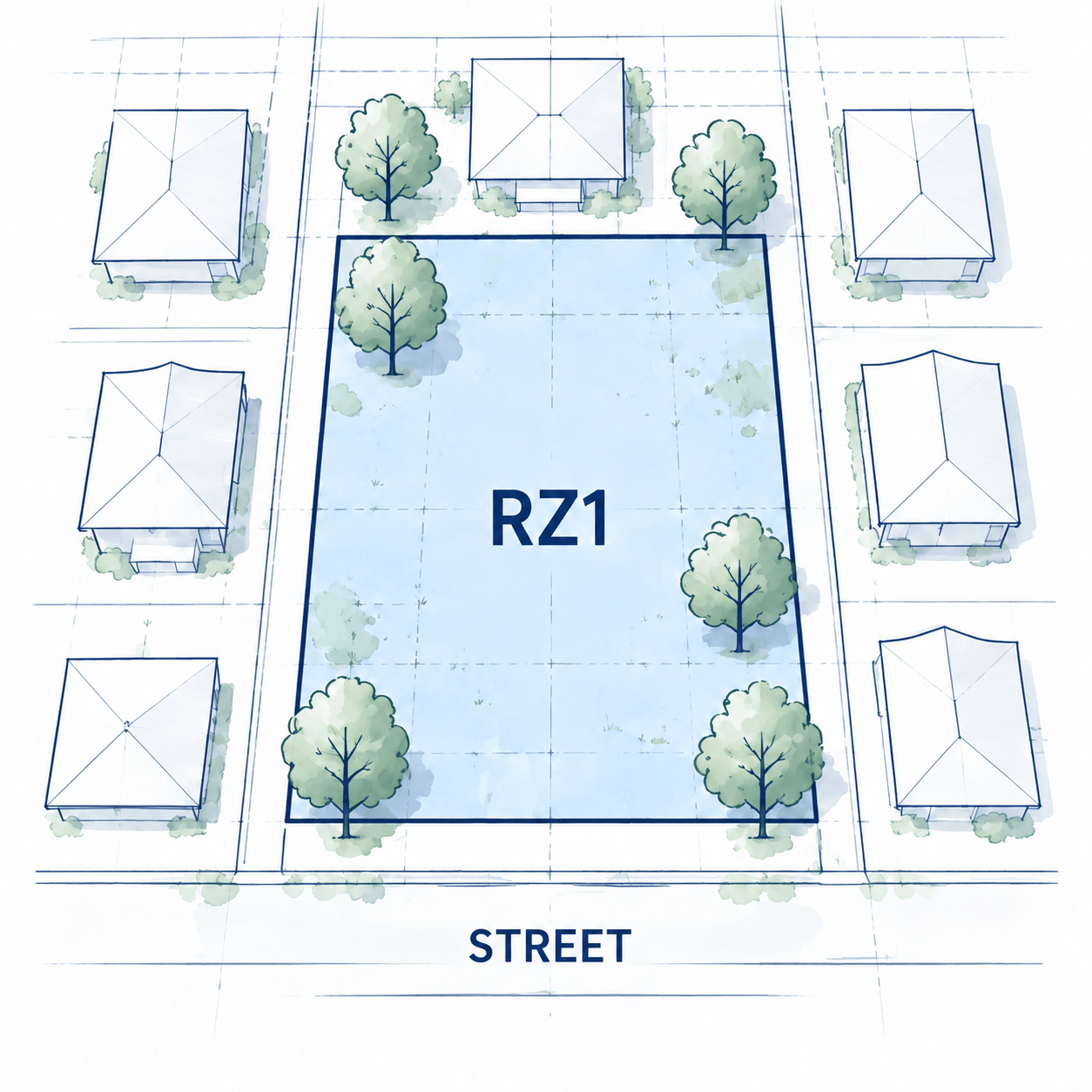
One 700m² block → two potential 350m²+ blocks
The illustration shows the basic area concept before other property-specific planning controls are considered.

700m² does not automatically mean your block can be subdivided.Width, access, services, easements and other planning controls still apply.
Other key rules
-
 Each new block must meet the applicable area requirement
-
Setbacks and site coverage still apply
-
Suitable access must be provided
-
Easements, services, trees and constraints may affect the outcome


Two ways to achieve separate ownership
Block subdivision and unit title are different pathways. The illustrations below show the key difference between separate land parcels and separately owned units.
Subdivision vs unit title
These two ownership structures may look similar from the street, but legally they work differently.
Block subdivision

-
Separate land parcels
Each lot becomes its own parcel of land.
-
Separate titles
Each subdivided block can have its own title.
-
Independent ownership
Each block can potentially be sold separately.


Unit title

-
One underlying land parcel
The land is not divided into two separate blocks.
-
Separate ownership of units
Each eligible unit can have separate ownership.
-
Common property may apply
Shared areas such as access may form common property.


The right option depends on your property, proposed development and applicable planning requirements.
Site coverage (RZ1)
Maximum site coverage for multi-unit housing, including dual occupancy, in RZ1 and RZ2 is generally 45% of the original block area.
What 45% site coverage looks like
The building footprint occupies up to 45% of the original block, leaving the remaining area outside the building footprint visible.

Maximum site coverage
The roofed building footprint can occupy up to the applicable site coverage limit.
Area outside the footprint
The remainder of the block sits outside the building footprint shown in the diagram.
It includes roofed areas such as the house, garage, carport and covered outdoor areas.
RZ1 unit titling requirements
Unit-title subdivision does not create two separate blocks of land. It creates separate ownership of units within an eligible completed development.
For an RZ1 dual occupancy, the unit-title process is separate from the original development approval and must satisfy the relevant Territory Plan, Crown lease and unit-title requirements.
How unit title works — the four steps
Build → occupancy documentation → title process → separate units.
Build it

Dual occupancy development is lawfully constructed.
Complete it
Obtain the required occupancy documentation.
Title process
Meet the relevant subdivision and unit-title requirements.
Separate units
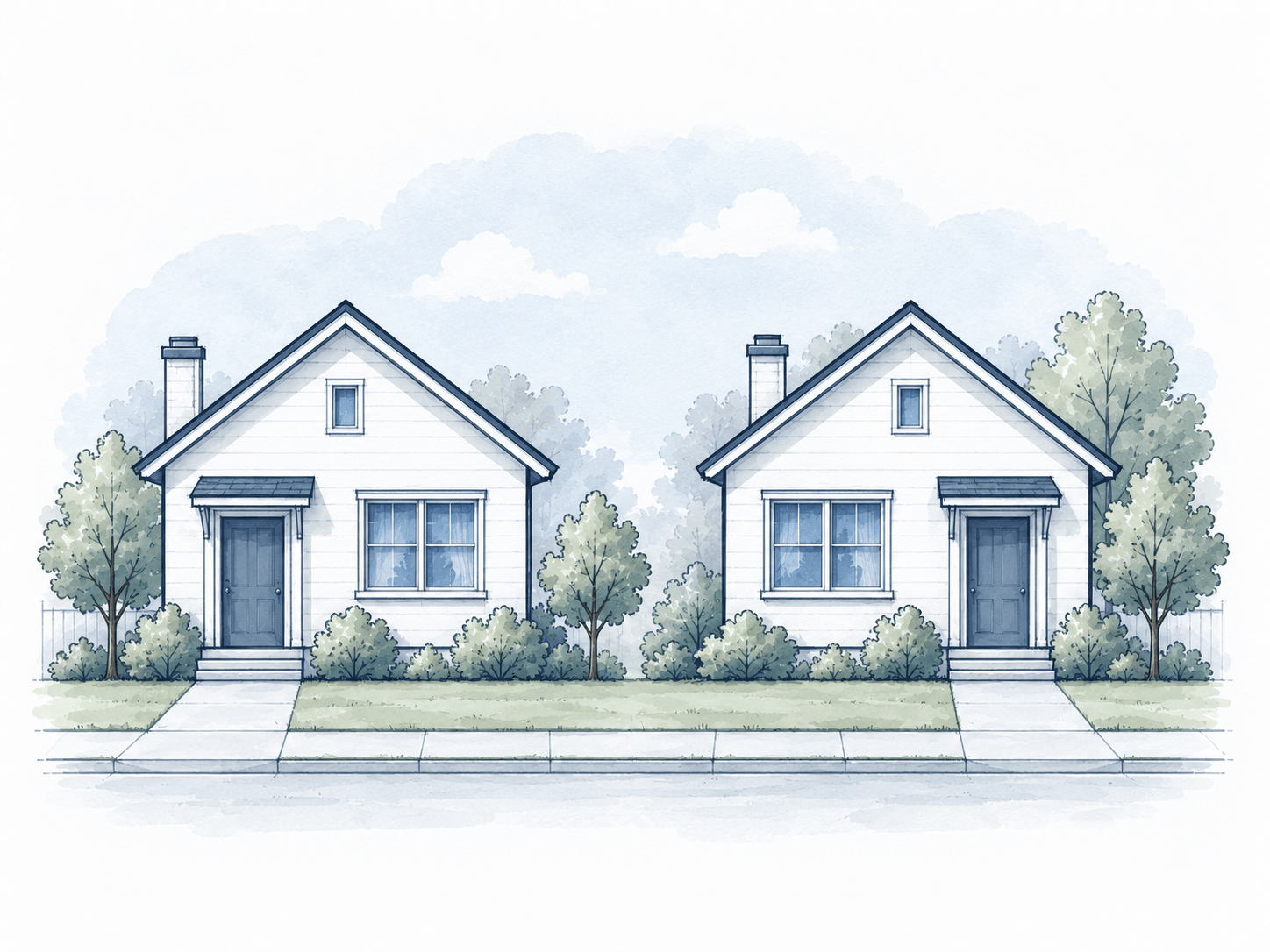
Eligible units can then be registered as separate units.
The completed development must still satisfy the relevant subdivision, unit-title and property-specific requirements.
Explore the related planning questions or check what may apply to your own block.
Can I subdivide my RZ1 block?
A block may meet the minimum area requirement and still need several other planning checks before subdivision can be confirmed.
A simple way to assess the opportunity
Follow the four key checks from zoning through to the most suitable development pathway.
Is it RZ1?
Check the zone, Crown lease and block details.

Land size & dimensions?
Check block area, frontage, dimensions and access.

Can each block work?
Consider setbacks, coverage, services, trees & constraints.

Which pathway?
Block subdivision, dual occupancy or unit title.
The dimensions, access, site controls and property-specific constraints determine which pathway may actually be possible.
What can stop a subdivision?
Even if a block meets the minimum area requirement, site-specific constraints may limit or prevent subdivision.
One block can have several planning constraints
Block size is only one part of the assessment. Easements, trees, setbacks, access and services can all affect what may be possible.

Easements
Location, type and width of easements may restrict where development can occur.
Narrow frontage
Limited frontage may prevent compliant block layouts or suitable access.
Services
Sewer, stormwater, water, electricity and NBN servicing may affect feasibility.


Tree restrictions
Regulated or protected trees may restrict building areas and subdivision layouts.

Setbacks
Required distances from boundaries and other buildings can reduce usable space.

Driveway access
Each proposed block needs suitable access that meets planning and engineering requirements.
Two blocks with the same land area can have very different outcomes because of access, easements, trees, setbacks, services and other site-specific constraints.
Check your block to understand the planning factors that may influence its development potential.

Related RZ1 planning questions
Detailed answers about subdivision, dual occupancy, site coverage and unit titling.
 Dual Occupancy
What determines whether a dual occupancy is permitted
on an RZ1 property?
Read full answer
Planning Documents
What planning documents should be reviewed before
assessing an RZ1 property?
Read full answer
Site Coverage
How much of my block can I build on?
Read full answer
Subdivision
Can I sell a newly created block without constructing
a dwelling on it?
Read full answer
Unit Titles
Under what circumstances can unit titles be created?
Read full answer
Development Potential
How is the maximum development potential of an
RZ1 property determined?
Read full answer
Build & Title
Can I construct first and subdivide or unit title later?
Read full answer
Getting Started
What are the first steps before starting a dual
occupancy or subdivision project?
Read full answer
Block Type
Can a dual occupancy be built on a battle-axe block?
Read full answer
Dual Occupancy
What determines whether a dual occupancy is permitted
on an RZ1 property?
Read full answer
Planning Documents
What planning documents should be reviewed before
assessing an RZ1 property?
Read full answer
Site Coverage
How much of my block can I build on?
Read full answer
Subdivision
Can I sell a newly created block without constructing
a dwelling on it?
Read full answer
Unit Titles
Under what circumstances can unit titles be created?
Read full answer
Development Potential
How is the maximum development potential of an
RZ1 property determined?
Read full answer
Build & Title
Can I construct first and subdivide or unit title later?
Read full answer
Getting Started
What are the first steps before starting a dual
occupancy or subdivision project?
Read full answer
Block Type
Can a dual occupancy be built on a battle-axe block?
Read full answer
Last updated: 8 September 2026
Frequently asked RZ1 questions
Is every 700m² RZ1 block automatically able to be subdivided?
Can I build a dual occupancy on an RZ1 block?
What is the general site coverage for dual occupancy in RZ1?
Is block subdivision the same as unit-title subdivision?
Not sure what's possible on your block?
Get a personalised assessment from our Canberra planning experts.
General information only. This page is not legal or planning advice. Always confirm the requirements applying to your specific property.